Slabs
Slab Systems
Roof. Floor. Balcony. Parking deck. Swimming pool
India’s Best Quality Reinforcements
and upto 40% savings on your next project
Finest European Technology at Work
About RebarX
Rooted in Central India, RebarX is engineered to make your RCC Construction 10X better. It is led by a team of GFRP experts in guidance from European Technology Partners.
 Globally Certified
 Precision Engineered
 Expert-Led
 Tested Excellence
Where RebarX is used
Anywhere corrosion, weight or electromagnetic interference limits what steel can do — from slabs and retaining walls to marine, water and power infrastructure.
Roof. Floor. Balcony. Parking deck. Swimming pool
Retaining walls. Basement walls. Boundary walls
Slab-on-grade. Basement slabs. Raft foundations. Equipment foundations
Bridge deck slabs. Approach slabs. Barrier walls. Sidewalk elements
Culverts. Storm water channels. Manholes. Detention ponds
Concrete pavements. Airport runways. Railroad crossings. Median barriers
Equipment foundations. Secondary containment. Pump foundations. Tank foundations
Substation foundations. Cable trenches. Cooling tower structures. Transformer yards
Clarifier tanks. Filtration systems. Aeration basins. Treated water storage
Technical Comparison
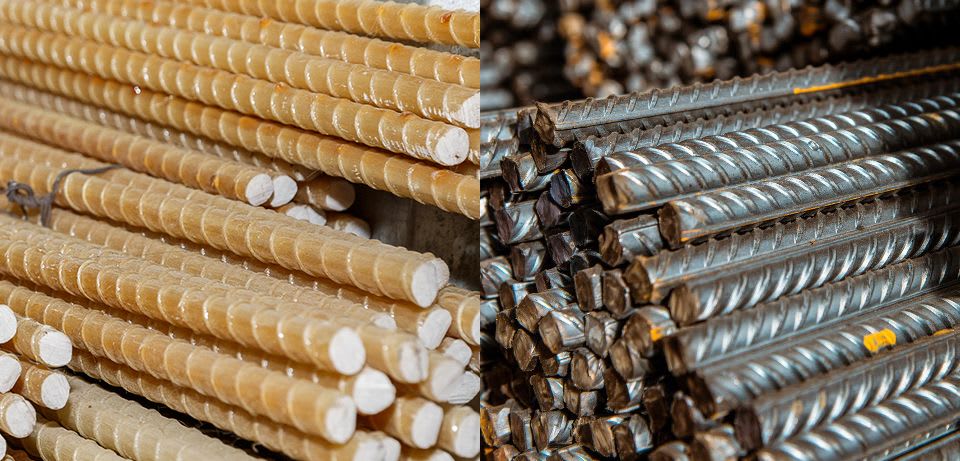
 RebarXGFRPTMT Steel Rebar
Corrosion Free, Double Tensile Strength, Cost Savings
Product range
Straight bar and custom-formed shapes, cut to length so there is no wastage on site.
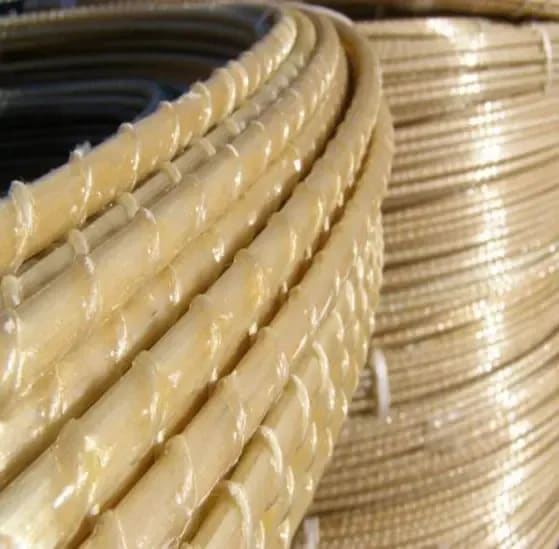
RebarX rebars available in 4–24mm diameters, available in custom lengths to ensure 0 wastage Customised for niche applications
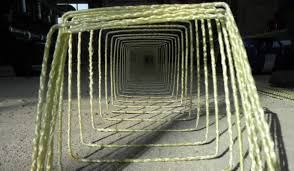
RebarX Bents available in 4-16mm diameters, available in any shape and size as per application. Manufactured with World's Best Technology
We believe in building a corrosion-free, maintenance-light future for Indian infrastructure. By combining innovation, sustainability, and technical excellence, RebarX empowers builders, engineers, and developers to create lasting value.
Insights
Questions
GFRP (Glass Fiber Reinforced Polymer) is a corrosion-resistant, lightweight material that is 2x stronger and up to 80% lighter than steel. It doesn’t rust, making it ideal for long-lasting infrastructure in harsh environments.
It is not.
No. GFRP has no iron content, so there's no corrosion mechanism at all — no rust stains, no cracking from expanding rust, and no weakening over time in wet, coastal, or chemical-exposure conditions.
Slabs, industrial flooring, retaining walls, precast components, boundary walls, and other surface/subsurface applications. It's not currently recommended for column sections in RCC construction — TMT steel remains the standard there.
Yes — RebarX GFRP rebar is manufactured and tested to IS 18256, covering tensile strength, fiber content, and glass transition temperature, with 100% epoxy resin declared in writing for every batch.
80–100+ years design service life, versus roughly 20–50 years for TMT steel in the same conditions — corrosion is what limits steel's lifespan, and GFRP simply doesn't have that failure mode.
Per-kg cost is typically higher than TMT steel, but GFRP is about 80% lighter, which cuts transport and handling cost, and its resistance to corrosion removes a major long-term maintenance and repair cost that steel-reinforced structures carry over their lifetime.
No — GFRP is a composite, not a metal, so it can't be welded or joined by heat. Bar-to-bar continuity is achieved through overlap/lap length and mechanical detailing instead, the same way any non-weldable reinforcement is designed.
No to both. GFRP is non-conductive and non-magnetic, which makes it suitable for MRI rooms, electrical substations, and other sites where steel reinforcement would interfere with equipment or create a safety hazard.
Resources
Everything your consultant or structural engineer needs to evaluate GFRP — in two documents. View the full Technical Resource Center →
RebarX India